The Clinician In Bloom®
Learn floristry while making space for yourself and your professional practice.
A six-week live online professional learning experience for healthcare clinicians, bringing together floristry, psychological theory and reflective practice. Each week, learn practical floristry while making meaningful space to pause, create and reflect on yourself within your professional work.
No previous floristry experience is needed.
▣ 6 weeks live online | 12 hours of structured professional learning
❀ DATES TO BE ADVISED
Registration closes 28 September 2026.
A different kind of professional learning
The Clinician In Bloom creates space to step out of the usual ways of learning and into something more creative, sensory and experiential, while still grounded in psychological theory and reflective practice.
What this looks like each week....

Practical Floristry
Learn step-by-step floristry techniques as you create a different arrangement each week.
Mindfulness & Reflective Practice
Use the creative process to pause, notice and reflect on yourself within your professional work.
Psychological Theory
Explore a different psychological or theoretical lens to support professional learning and reflection.
Therapeutic Horticulture
Explore flowers, plants and the creative process as an experiential medium for reflection and learning.
Each week, these elements come together as you create a floral arrangement and use the process as a prompt for guided reflection.
Does this sound familiar?
You’re the one people count on. You hold space. You show up. You give....over and over again.
Perhaps lately you’ve noticed:
Switching off at the end of the day can be difficult.
Your own needs can move down the list when there is always something else requiring your attention.
Traditional approaches to self-care don't always resonate with you.
Self-care can start to feel like another task on an already full list.
You miss having something creative, sensory and enjoyable that is simply for you.

Does this sound familiar?
You’re the one people count on. You hold space. You show up. You give....over and over again.
Perhaps lately you’ve noticed:
Switching off at the end of the day can be difficult.
Your own needs can move down the list when there is always something else requiring your attention.
Traditional approaches to self-care don't always resonate with you.
Self-care can start to feel like another task on an already full list.
You miss having something creative, sensory and enjoyable that is simply for you.
Sometimes flourishing means finding
another way...
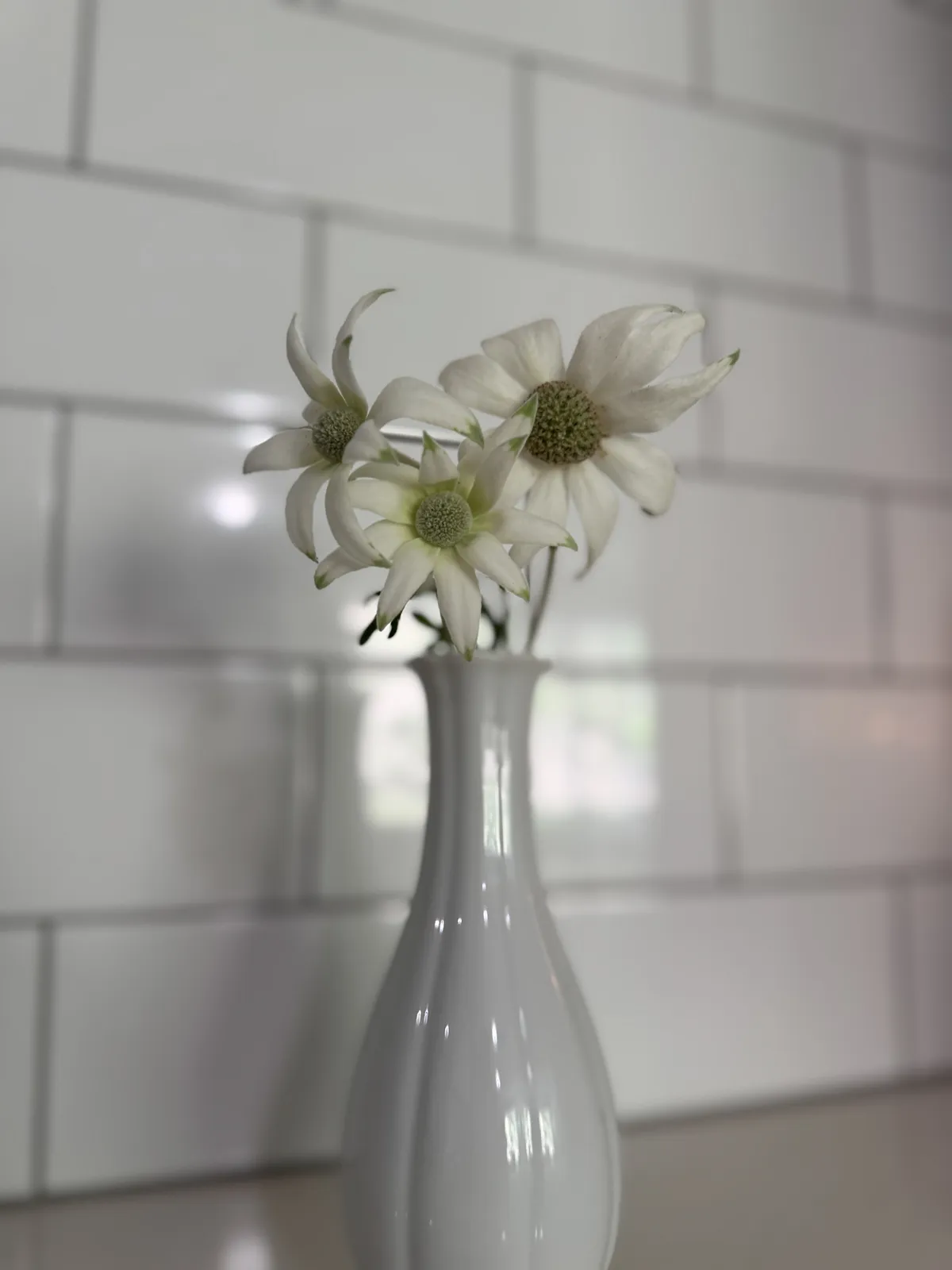
The Flannel Flower (Actinotus helianthi) velvety soft petals and leaves make them tactile and sensory. It is also Australia’s national symbol for mental health awareness, representing resilience and adaptability
.
I was determined to grow them from seed. After several failed attempts, I even lit a small fire in a terracotta pot hoping the smoke and heat would help (don’t try this at home!). It didn’t work. So, I changed my approach and bought tubestock instead. I now have around 20 plants thriving in pots.
For me, they’re a reminder that resilience isn’t always about trying harder.
Sometimes it means adapting and finding another way.
That idea sits behind The Clinician In Bloom. Sometimes self-care means finding a different approach that works for us.
This is where The Clinician In Bloom offers something different.
Because the ones who hold space for everyone else
deserve a space of their own.
And while you’re not looking for therapy,
you are looking for a unique and different space that supports
reflection, insight, and renewal.....without pressure or performance.
What participants said about the training...
“The Clinician in Bloom has been a journey of sensory rich, hands on reflection and exploration alongside like-minded professionals. The course encourages
self-care and reflection through doing. This non-traditional approach to self-care felt organic and wholesome, leaving me with realistic practical skills I can use everyday.
The course has been the highlight of my work week for the past 6 weeks!
I very much recommend this course to anyone who benefits from hands on learning, enjoys sensory exploration, has an appreciation for flowers, and wants to tap into understanding their inner world through creativity.”
Jessica
Clinical Psychologist
Why I developed The Clinician In Bloom.
As a healthcare clinician, I am acutely aware of the demands of this work and the importance of professional learning that not only develops our knowledge and skills, but also creates space to reflect on ourselves within the work we do.
I originally trained as a florist after choosing to do something creative for my own self-care.
Through floristry, I was introduced to Therapeutic Horticulture and became increasingly interested in what could happen when flowers, psychology and reflective practice were brought together.
This became the foundation for developing The Clinician In Bloom.
Who's This Perfect For?
Mental Health Clinicians & Therapists
allied health
clinicians
doctors, nurses & medical clinicians
other clinicians in
HEALTHCARE & SUPPORT ROLES
The Clinician In Bloom, is for healthcare clinicians looking for:
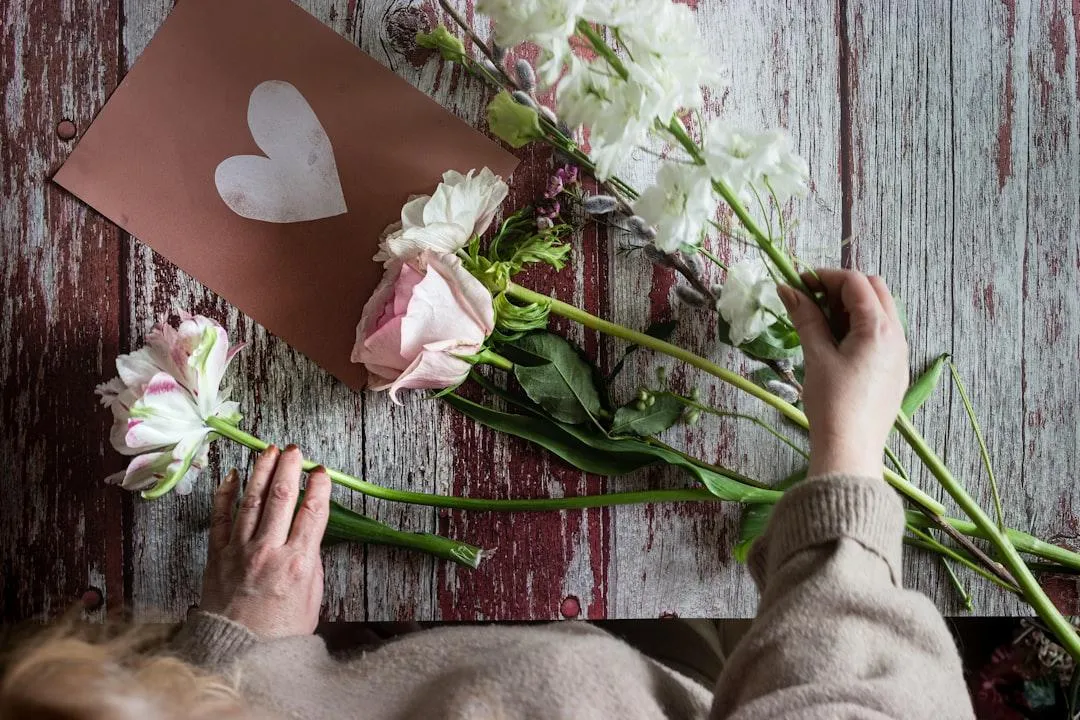
Sensory and creative tools
Using flowers and the making process to pause, engage your attention and create space for reflection.
Reconnection with joy and beauty
Making space for something hands-on and creative alongside the demands of professional work.
Engaging in reflective practice through floral metaphor
Using flowers, metaphor and psychologically informed ideas to explore yourself within your professional work.
Greater awareness of what sustains you in your role
Reflecting on what supports, replenishes and sustains you within your professional work.
More sustainable professional practice
Considering what helps you continue caring for others while also making space for yourself.
Why this matters for professional practice?
Reflective practice and clinician self-care are recognised as important professional competencies across many disciplines, supporting our capacity to reflect on ourselves within our work and practise sustainably over time.
The Clinician In Bloom offers a different way to engage with this, through floristry, psychological theory, floral metaphor and guided reflection.
So, what exactly is The Clinician In Bloom?
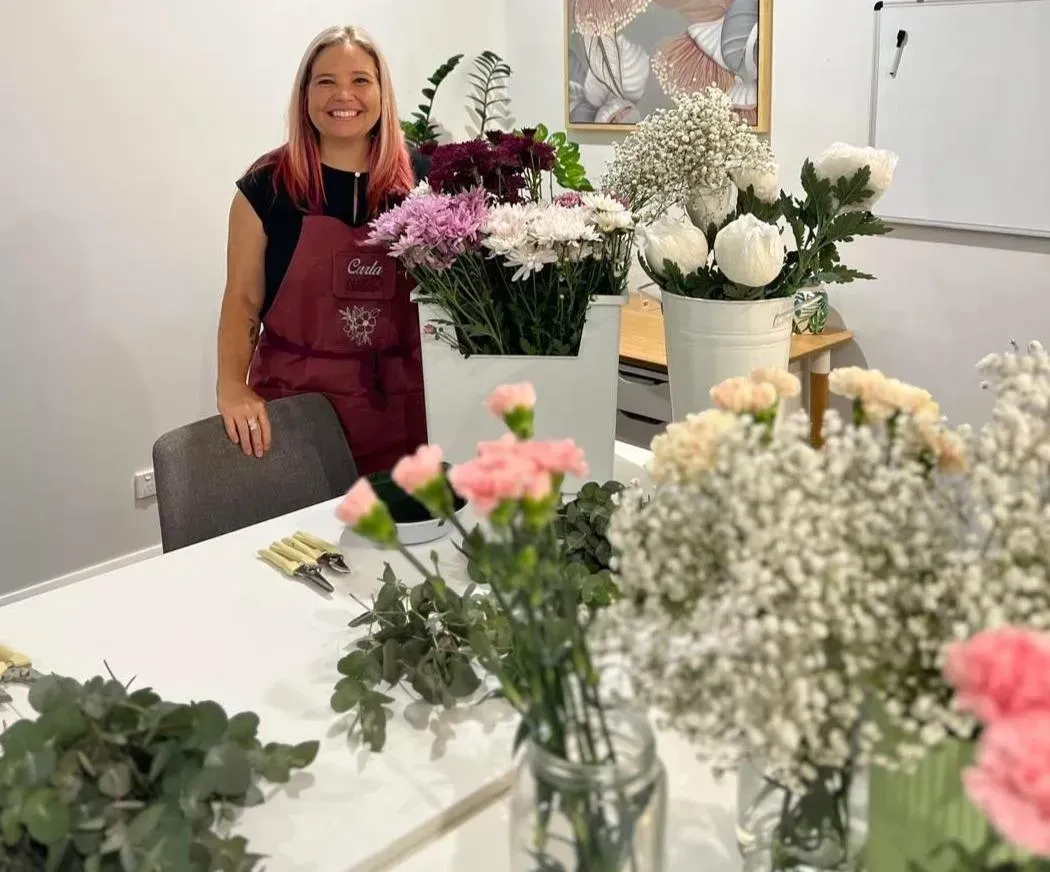
This isn’t just a floristry class and it’s not therapy.
It’s a professional learning experience created specifically for healthcare clinicians, bringing together practical floristry, psychological ideas, mindfulness and reflective practice.
You learn floristry while using the creative process as a different way to pause, reflect on yourself within your professional work, and consider what helps sustain you as a clinician.
What participants said about the training...
“Clinician in Bloom is the most exquisite self-care program I have ever engaged in. Thoughtfully developed and skilfully delivered by Carla Anderson, Clinician in Bloom is self-care delivered with heart. Carla weaves psychological theory, floristry skills and reflective practice with the creative soul of an artist.
Not only did I savour the 1.5hrs together online as a group, the combination of Carla's insights, my personal reflections, and the tangible reminder of the flowers themselves, acted as a sort of slow-release capsule of goodness, providing sustained nourishment through the week. It was a remarkable experience - totally unique and unreplicable.”
Bronwyn
Clinical Psychologist
Across the six weeks...
Learn floristry
Each week you learn practical floristry techniques and create a different floral arrangement.
Experience it through therapeutic horticulture
The sensory, creative and nature-based process of working with flowers provides an experiential starting point for slowing down and reflection.
Explore it through psychology theory
Each week a different psychological or theoretical lens adds another layer to the reflective experience.
The Weekly
Themes?
Across the six weeks, each floral arrangement becomes a different starting point for reflection, with its own theme, metaphor and focus.
The Vase
Recognise what needs tending
The Focal Flower
Reframe where to put your focus
The Wild Posy
Reconnect with creativity and joy
The Story Arrangement
Reflection and meaning making
The Centrepiece
Replenish and hold space for self
The Lasting Stem
Integration and sustainable self-care
What is Therapeutic Horticulture?
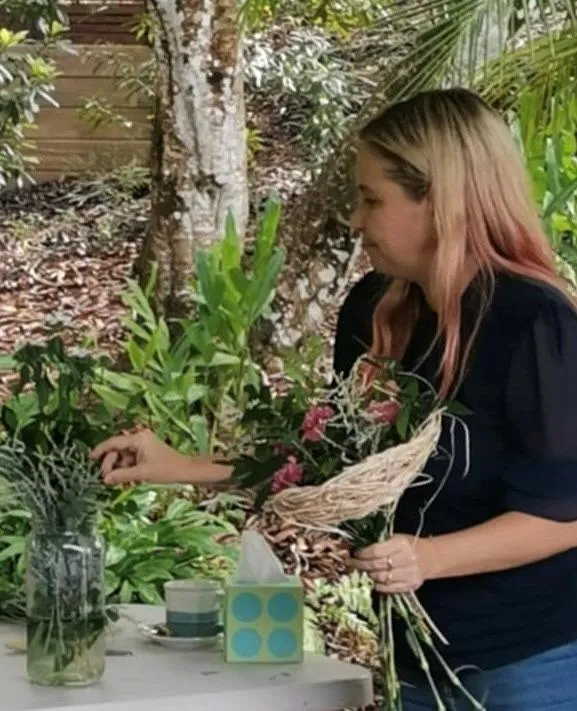
Therapeutic Horticulture uses plants and nature-based activities intentionally to support wellbeing, reflection and engagement.
In The Clinician In Bloom, working with flowers becomes an experiential starting point for reflection, bringing together the sensory and creative qualities of floristry with psychologically informed learning.
It is not therapy, but a purposeful, structured, evidence-informed practice that engages the mind and body through sensory, creative, and nature-based experiences.
How psychology theory is woven through the experience...
Each week, flower meanings, metaphor and a different theoretical lens guide reflection on ourselves and our professional work.
Attachment
theory
Explore connection, relationships and how relational experiences shape our professional practice.
Compassion-focused approaches
Reflect on how we respond to ourselves with compassion when professional work feels difficult.
Attention Restoration Theory
Learn about attention, cognitive fatigue and the restorative role of engaging with nature.
Schema
theory
Explore patterns and beliefs that shape how we respond within professional practice.
Narrative and meaning-making
Think about the stories we construct about ourselves and our professional work.
Reflective and sustainable practice
Exploring our professional experiences and responses to support learning and development
What participants said about the training...
“Carla provides a beautifully, warm, nurturing and non-judgemental space that invites you to mindfully reflect on ourselves. Each week we made a different floral arrangement, while intentionally reflecting on the therapeutic meaning of what we were creating, all in the context of self care for ourselves professionally and personally.
It was a beautifully nurturing experience where I got to be mindful and reflective whilst slowing down, being creative and producing some interesting arrangements.”
Therese
Credentialed Mental Health Nurse
Practical Information.
What's Included...
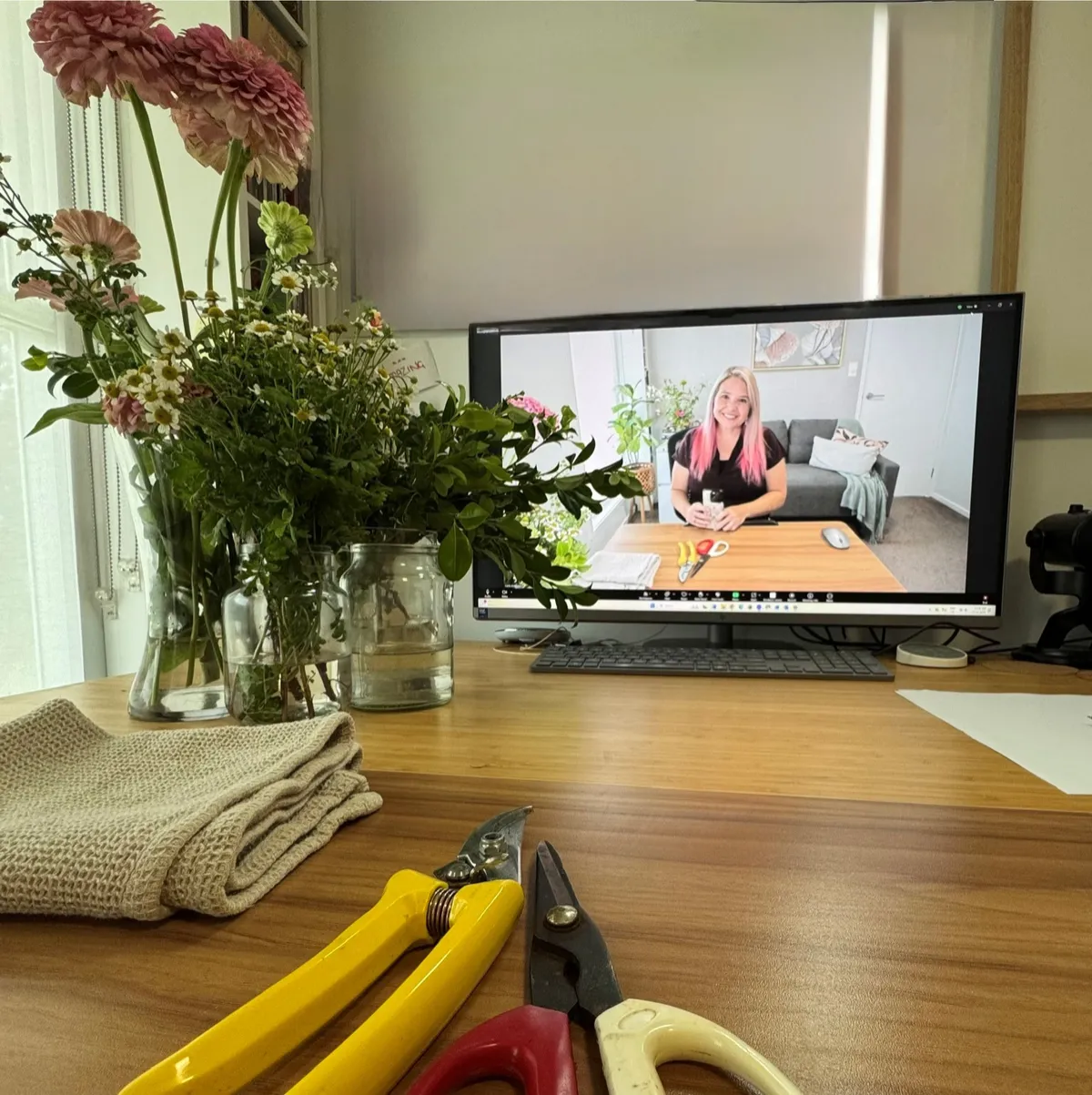
Live- Online Session Schedule
6 Weeks, 1.5 hour live online
DATES TO BE ADVISED
12 hours of CPD
Including pre-recorded learning live-online interactive sessions. All sessions are recorded..
Pre-recorded learning + guidebook
Complete the pre-recorded learning before each live session, with your guidebook supporting your learning and reflection.
What will I need?
I’ll provide guidance each week on what to buy, with plenty of flexibility to use affordable, home-grown, foraged or substituted flowers and materials based on what’s available to you.
Flowers & Materials
Flowers and materials are additional to the course fee. As a guide, participants on average spent $100–$150 across the six weeks. You can save by using supermarket or market flowers, home-grown flowers, suitable foraged materials and substitutions based on what’s available locally.
Step-by-step floristry
No floristry experience is needed. You’ll be guided through a different floral arrangement each week.
Reflective practice
Connect flowers, metaphor and psychological theory with reflection on yourself and your professional work. (You don't have to share with the other participants if you don't want to)
Certificate of completion
Provided following completion of the program requirements.
What participants said about the training...
“It is a truly beautiful way to learn & self care all at once!”
Amanda
Clinical Psychologist
“My kind of PD! reflection, and something for myself.”
Louella
Psychologist
“It is enjoyable, meaningful and reflective!”
Emily
Clinical Psychologist
Ready to join
The Clinician In Bloom?
Registrations close 28 September 2026, or earlier if the small group is filled.
Choose the payment options that work best for you
pay in full
$897
one payment today
two payments
2 x $450
The first payment is charged when you register, followed by one scheduled payments in one month's time.
three payments
3 x $300
The first payment is charged when you register, followed by two scheduled payments in one month and two month's time.
Once you’ve registered, you’ll receive an email with everything you need to get started, including access to the student portal and further program details. Please check your junk folder if it doesn’t arrive, or contact me at [email protected]. Please note: The Clinician In Bloom is available to Australian residents only. To avoid potential conflicts of interest, current psychological therapy clients of Carla Anderson are unable to participate.
Want to explore some of the ideas behind
The Clinician In Bloom?
Start with the free Quiz:
Which Flower Are You?
In just 90 seconds, discover one of four flowers offering a different lens on the kind of self-care that might work for you. Then receive your personalised flower journal and explore botanical stories, flower meanings, floral metaphor and reflective prompts.

COMPANY
FOLLOW


SUPPORT
LEGAL
*Disclaimers:
➡️ To avoid any potential conflicts of interest,
psychological therapy clients of Carla are unfortunately not able to participate in training. The psychoeducation and training programs delivered by Carla Anderson Clinician Psychology and Training are not clinical psychology services; they are psychoeducational only. This work is the result of many years of development and integrates my clinical psychology background, perinatal and infant mental health work, reflective practice, and floristry training The frameworks, structures, metaphors, and processes that form these training programs are protected intellectual property.
They are not available for replication, adaptation, mentoring, or train-the-trainer pathways. I am continuing to develop and deliver these models myself, and I appreciate your understanding and respect for the integrity of this work.
© Copyright 2025. Carla Anderson Clinician Training.
All Rights Reserved.